Poetry was once a major literary form, but has faded from popularity in a world of impatient, busy people who write in emojis. Now imagine trying to get college freshmen to slow down and dig through the elevated language and hidden meanings and to stop and absorb the poem’s emotional gifts.
As an instructor, I wouldn’t dare introduce them to W.B. Yeats’ “The Circus Animal’s Desertion”—a poem about the growing infirmity of old age: “Now that my ladder’s gone I must lie down . . . in the foul rag-and-bone shop of the heart.” It’s just too esoteric.
https://www.poetryfoundation.org/poems/43299/the-circus-animals-desertion
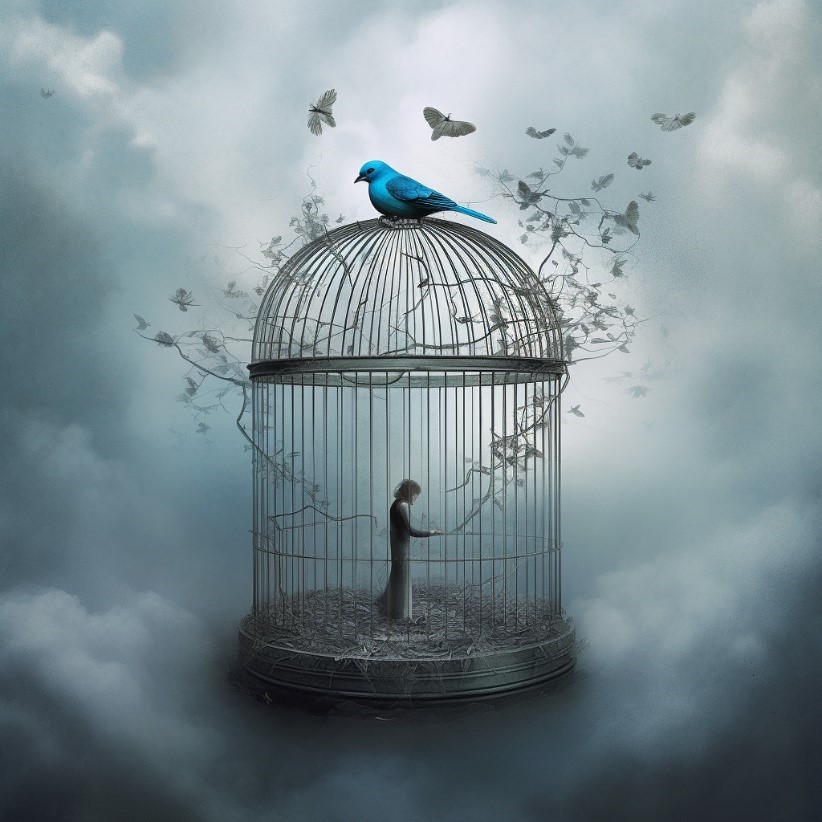
I find that they do fairly well with Maya Angelou’s “Caged Bird.” Bars are easily interpreted as loss of freedom. The poem differentiates between the free bird who “leaps on the back of the wind and floats downstream . . .” and the caged bird? His “wings are clipped and his feet are tied so he opens his throat to sing.”
It takes a little prompting to help students see that the caged bird’s only tool is his voice, so he sings in protest. I also have them Google the connection between the caged bird and Angelou’s slave-ancestors, who also sang in protest as they toiled in the fields.
https://www.poetryfoundation.org/poems/48989/caged-bird
Next, we try W. H. Auden’s “Funeral Blues.” The speaker in the poem is mourning the loss of a loved one, and he insists that the world comes to a halt: “Stop all the clocks, cut off the telephone . . . silence the pianos and with muffled drum, bring out the coffin, let the mourners come.”
https://allpoetry.com/Funeral-Blues
I found my students could easily understand the scene, but unless they had lost someone dear to them, it was only a classroom exercise and no more. I wanted them to feel, to empathize with the mourner, to have heart. The solution was fairly easy—viewing the lamentations scene from the movie Four Weddings and a Funeral:
Once they were past YouTube’s distracting ads, it is impossible to ignore the visual cues of the funeral, the emotional quaver in the voice of the bereaved, hear the lyricism of the poem, its mournful words. The stillness of the room always told me the exercise was a success.
Of course, not all poetry has a visual prompt, and not all poetry is nearly so sad, but the lesson is the same: to enjoy this art form, we have to slow down, read deeply, and be open to emotions—that of the poet and our own.
JONNIE MARTIN
POST SCRIPT: Tell me about your favorite poem that stirs your philosophical thoughts, your deep feelings! And check back next week for a surprise–an old blog I wrote about my cousin the rancher who was the inspiration for the protagonist in my novel, WRANGLE.

 My Writerly Life
Leave a comment