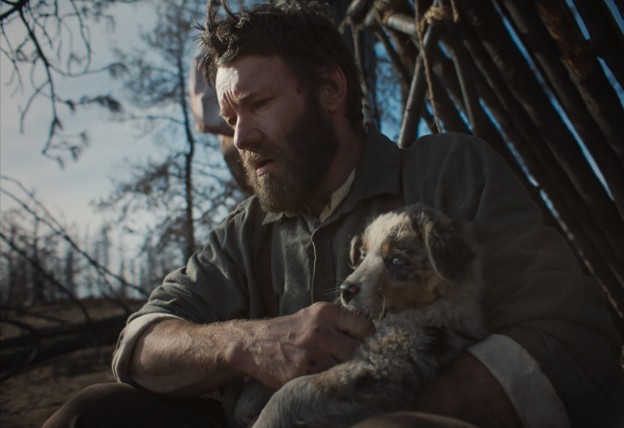
In 2025, a spate of movies were released based on literary novels, modern and classical. There was Guillermo del Toro’s Frankenstein (a re-imagining of Mary Shelley’s gothic work); Francois Ozon’s The Stranger (Albert Camus’ 1942 novella); Kei Ishikawa’s A Pale View of Hills (Kazuo Ishiguro);Chloe Zhao’s Hamnet (Maggie O’Farrell) and Clint Bentley’s Train Dreams (Denis Johnson).
I am particularly eager to watch Hamnet, because it is based on the home life of William Shakespeare and the death of his son Hamnet, which is thought to have inspired his great tragedy Hamlet. However it was Train Dreams that topped my list, because I had read Denis Johnson’s novella years before. The book and the movie were different—as one can expect of film adaptations—but both offered rewards.
The novella is quite melancholy, which marks all of Denis Johnson’s work. Much of his life was marked by his struggle with alcohol and drugs, and that was particularly evident in his short story collection, Jesus’ Son, based on the lives of addicts. This book also made it to the big screen and can be previewed by its trailer: https://www.youtube.com/watch?v=4C7KjAd5PT4.
Johnson’s novel, Tree of Smoke, is set in Vietnam, and reflects the madness and trauma of war. It earned the National Book award and was a finalist for the Pulitzer in 2008. Four years later, his novella Train Dreams was also a Pulitzer finalist—a work that was less frenetic—a quieter study of logging in the American northwest in 1917.
Train Dreams centers around the life of Robert Gainer, a railroad laborer at the time that forests were being stripped to build trestles and clear the way for tracks into the far west. Despite the size of the book and the simple, quietness of the protagonist, it reads like an epic. It captures the development of the American west and the strength of the simple man at the center of the story.
In 2025, Train Dreams was reimagined on the big screen, and as can be expected with movie interpretations, there are differences between to the two sources. I usually bend toward the original, but in this case I have to acknowledge the visual panorama of the great forests and the difficult lives of the common laborer that can best be captured on the big screen.
The movie version does not do as well in presenting the full span of Grainer’s life story or the more supernatural aspects of his grief on the loss of his wife and child in a forest fire, but it does expand the love story between Grainer and his wife Gladys. There is more “heart” in the movie, evident in the movie trailer itself: https://www.youtube.com/watch?v=_Nk8TrBHOrA.
The movie has gotten lots of attention during awards season, thanks to the quiet performance by Joel Edgerton as Robert Grainer, so there is more of this story to tell. For me, I recommend both the book and the movie for a view of all sides of Denis Johnson’s lovely little masterpiece.
JONNIE MARTIN
 My Writerly Life
Leave a comment