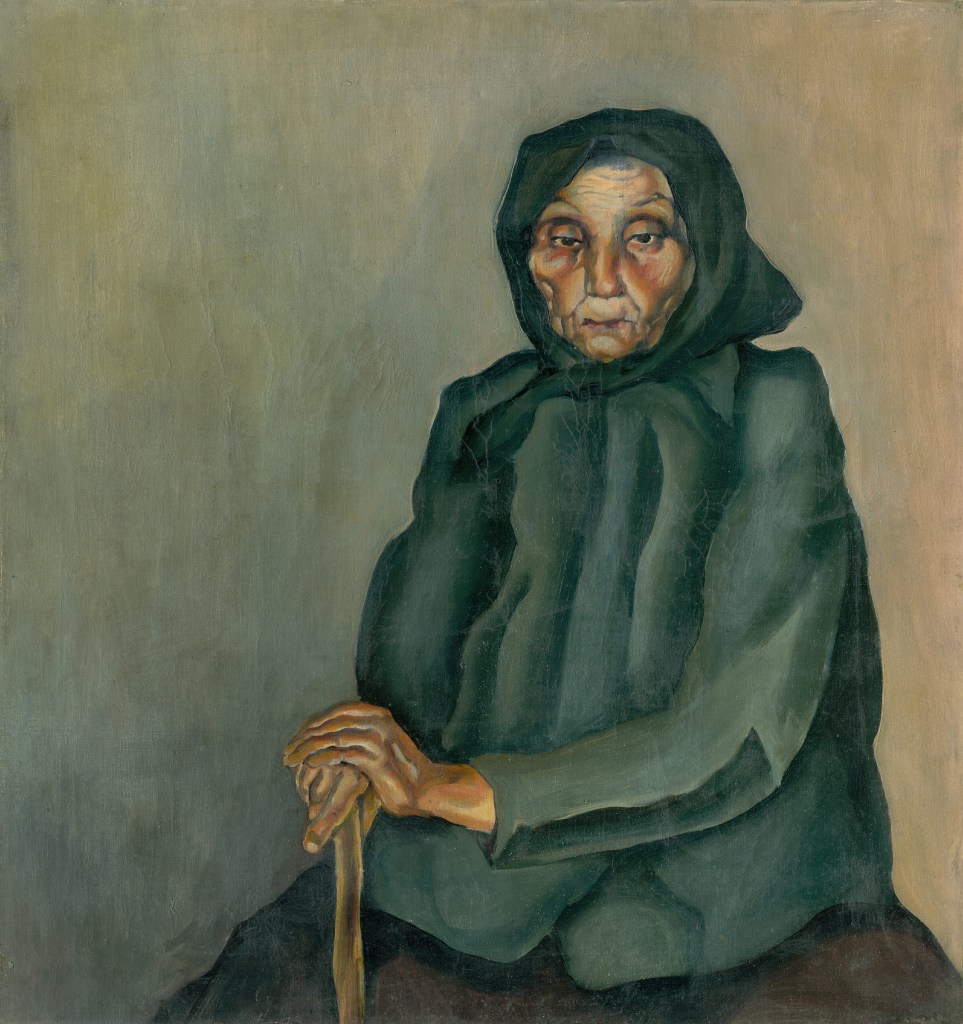
Very few literary novels deal with the delicate subject of growing old. After all, even the most scholarly author, the most erudite, needs to attract readers, and this is hardly a jolly topic—old age, with its proximity to death. And yet, if literary works are an exploration of the human condition, aging must be among the critical motifs.
It is a difficult topic for novels and indeed, a difficult topic in life. At age 86, I tend to agree with poet Alejander Jodorowsky:
It’s not easy to grow old.
you have to get used to it,
to walk more slowly,
to say goodbye to who you were
and salute who you’ve become.
I have not quite reached the point of saluting who I have become, but I must admit I have enjoyed some of the literary elders I have met. Among my favorites is the testy title character in Elizabeth Strout’s Olive Kitteridge. She is a school teacher that ages from 60-70, and she has spunk. She is also abrasive, cantankerous, and unaware of her impact on others.
In Olive, Again, we can see the changes that aging brings. Olive is now 82, has lost her husband and has a distant relationship with her son. She is lonely at times and much more sensitive to how she affects others.
I also liked Lyle Van Waning, the aging protagonist in James Galvin’s novel, The Meadow. He also is cantankerous, almost a hermit, more in touch with the coyotes in this near-wilderness than with its few inhabitants.
The setting is a fictional meadow at the base of the Never Summer Mountains at the Colorado/Wyoming border. There the land is harsh, untenable; isolated in winter. As Galvin writes about this world he created: “No one owns [the meadow]; no one ever will. Only [one person] succeeded in making a life here, for almost fifty years. He weathered.”
There are other novelistic elders that have moved me, including the Reverend John Ames, the protagonist for Marilynne Robinson’s Pulitzer-winning Gilead. The minister knows he is nearing life’s end and writes letters to his son. The book is too complex to describe here, but I agree with the reviewer who wrote that it is “a hymn of praise and lamentation.”
Let me mention one other character who moved me deeply—and that was Lily Bere, an elderly Irish woman whose life we follow through the lens of time, love and loss. As author Sebastian Barry opens On Canaan’s Side, we find that Lily has just learned of the suicide death of her beloved grandson. It reads:
“Bill is gone. What is the sound of an eighty-nine-year-old heart breaking?”
Oh, oh, oh. The novel tugged at my heart strings as Lily reviews her past life and decides whether there is reason for her to go on. This novel came closest to my own life because indeed, death surrounds us if we reach our eighties. Unlike Lily, I am not conflicted–I have every intention of living out all the years I am given–but most of the people I have loved dearly are gone.
JONNIE MARTIN
(Art by Konstantin Bauer 1927 courtesy of Europena and Unsplash)
 My Writerly Life
Leave a comment