Over the years I’ve noticed that I am drawn to literary writing with a lilt—a cadence as though the author was a poet or came from a culture like Ireland or Scotland, with their shared Gaelic history.
Anne Michaels, a Canadian poet, writes in a loosely structured novelistic style and infuses her poetic self throughout. In her book Held, part of the story takes place in Suffolk, along the English coastline, where people survive by fishing:
Each village with its own stitch; you could name a sailor’s home port by the pattern of his gansey. . . The error was a message sent into darkness, the stitch of calamity and terror, a signal to the future, from wife to widow. The prayer that, wherever found, a man might be returned to his family and laid to rest. That the dead would not lie alone. The error of love that proved its perfection.
Colum McCann was born in Dublin, but received his literary education in America and has lived here since—so it is difficult to access his Irish brogue. You have to go back to his earlier short stories set in Ireland, like Everything in this Country Must. It’s the story of an Irish farmer and daughter who try to rescue their draft horse from a river flood. A close read will find the vestiges of McCann’s Irish past:
The trees bent down to the river in a whispering and they hung their long shadows over the water and the horse jerked quick and sudden and I felt there would be a dying, but I pulled the rope up to keep her neck above water, only just.
It is easier to access the lilt of Irish author Sara Baume in her novel, Spill Simmer Falter Wither. Baume’s writing clearly reflects her brogue with passages like this one – a self-description by her protagonist, an aging, lonely outcast.
Shabbily dressed and sketchily bearded. Steam-rolled features and iron-filing stubble. When I stand still, I stoop, weighted down by my own lump of fear. When I move, my clodhopper feet and mismeasured legs make me pitch and clump.
Kevin Barry is my prime example of the Irish lilt. Born in Limerick, now living in Sligo, much of his writing is in a strong vernacular that can sometimes mean a lot of work for the reader to interpret. My favorite is “Ox Mountain Death Song,” a short story he published in The New Yorker in 2012 and later included in his short story collection, That Old Country Music in 2020. The story opens with Barry’s typical brogue:
[Canavan] had been planting babies all over the Ox Mountains since he was seventeen years old. Well, he had the hair for it, and the ferret grin, and there was hardly a female specimen along that part of the Sligo-Mayo border that hadn’t taken the scan of his hazel glance, or hadn’t had the hard word laid on, in the dark corners of bars, or in the hormone maelstrom of the country discos, or in untaxed cars, down backroads, under the silly, silly moonlight.
JONNIE MARTIN
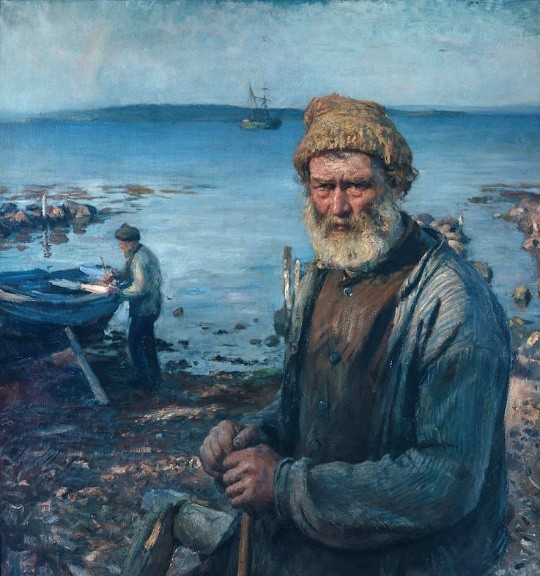
[Image from Fine Art America — Hans Heyerdahl artist]

 My Writerly Life
Leave a comment