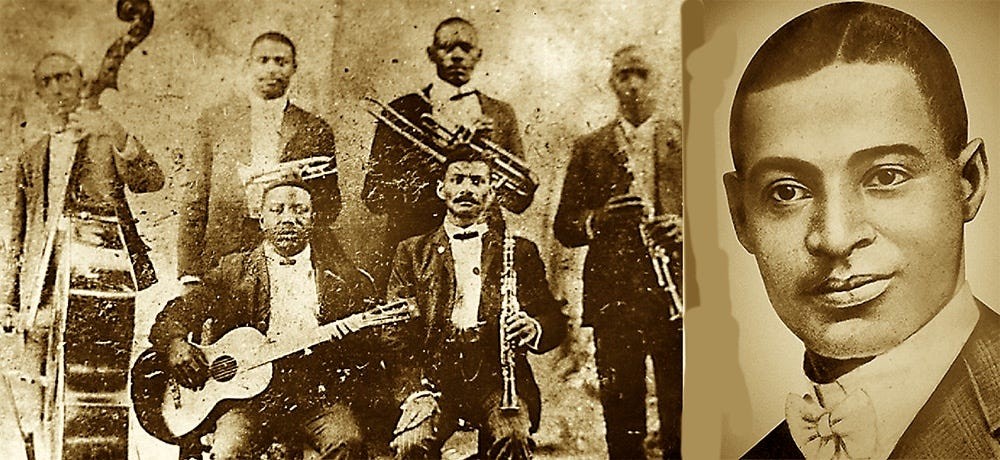
Michael Ondaatje is a Sri-Lankan born Canadian poet and novelist best known for The English Patient, which won the Booker Prize and was made into an award-winning film. Ondaatje writes thought-provoking, lyrical novels about outsiders, the “other” – which makes his books rich for analysis and study.
His early novella, Coming Through Slaughter, tells the story of jazz great, Buddy Bolden, who dominated the New Orleans scene in the early 1900s. It is a perfect text for the classroom or a book club, with its rich setting, characters, and use of various modalities.
At the turn of the century the Storyville district of New Orleans had some 2,000 prostitutes, 70 professional gamblers, and 30 piano players. It had only one man who played the cornet like Buddy Bolden. By day he cut hair and purveyed gossip at N. Joseph’s Shaving Parlor. At night he played jazz as though unleashing wild animals in a crowded room. At the age of thirty-one, Buddy Bolden went mad.
I have always liked this book, but as a teacher of literature, I find it irreplaceable. Just the characters alone make it worth the read:
Here the famous whore Bricktop Jackson carried a 15 inch knife and her lover John Miller had no left arm and wore a chain with an iron ball on the end to replace it—killed by Bricktop herself on December 7, 1861, because of his “bestial habits and ferocious manners.’ And here one-legged Duffy (born Mary Rich) was stabbed by her boyfriend and had her head beaten in with her own wooden leg.
The book is a short read, but full of various formats, a reflection of Ondaatje’s nature as a poet. There’s an appeal to the senses in the description of Buddy’s powerful music that filled the small jazz bars and pierced the night in a “burst of air [like] animals fight in the room.” There were playlists from the band, including Snake Rag, Funky Butt, and Take Your Big Leg Off Me.
The emotional core of the book is not Bolden’s women, or even the tragic turn of his career, but in Bolden’s attachment to the three jazzmen who he considered to be his “fathers” – musicians Mutt Carey, Bud Scott, and Happy Galloway.
Carey falls ill and dies while staying with Buddy: “Get the sweat out of my eyes, get the sweat out of my eyes fuckit I’m going to die, and then dead in the middle of a shake.” Buddy “kissed the soft old lips” and mourned.
Ondaatje does a magnificent job of presenting Bolden as a musical genius and a flawed man, particularly when it came to the women in his life. The verse by his wife Nora tells all:
Dragging his bone over town. Dragging his bone over town. Dragging his bone over town. Dragging his bone over town. Dragging his bone over and over dragging his bone over town. Then, and then, and then and then dragging his gone over town. And then dragging his bone home.
JONNIE MARTIN
(Photo collage from Charles Bowen’s post, The 1937 Flood Watch (with an emphasis on Bolden’s music). https://1937flood.substack.com/p/buddy-boldens-blues?utm_source=publication-search
 My Writerly Life
Leave a comment